Loading...
Serving Victorville, CA and surrounding areas. (442) 219-3154
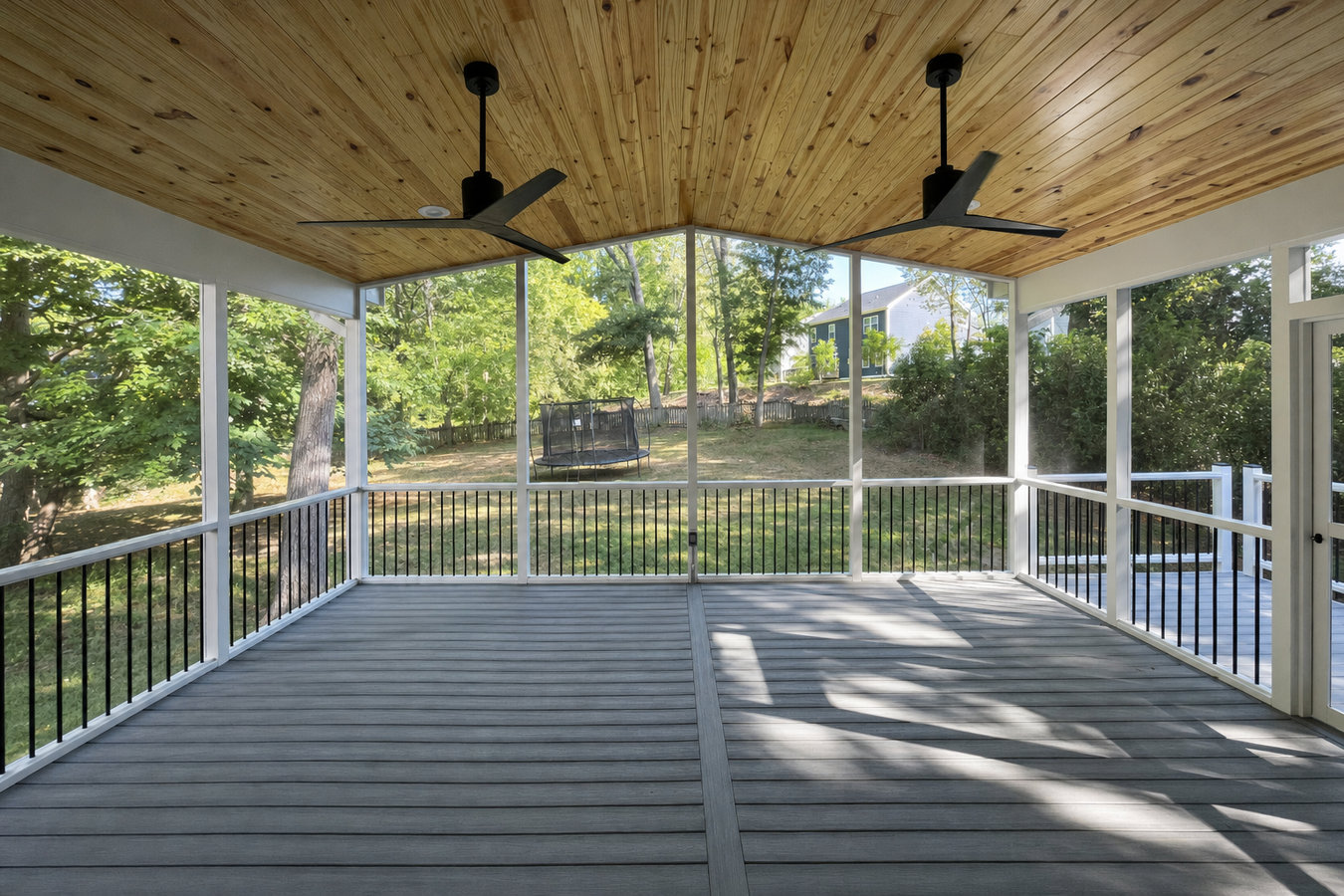
Desert dust, bugs, and High Desert winds keep you inside - a screened porch gives you a comfortable outdoor room you can actually use morning to night.
Screened-in porches and screened decks in Victorville give homeowners a fully enclosed outdoor room with mesh panels that block bugs, wind-driven dust, and debris while letting in fresh air and natural light - most projects on an existing solid deck take three to seven days of construction once the city permit is approved.
A lot of Victorville homeowners have a perfectly good deck that they simply stopped using because of the bugs in the evenings, the spring dust events, or the feeling that the space is too exposed. Screening it in solves all three problems without requiring you to tear anything out and start over. If your deck is in good shape structurally, converting it to a screened porch is a straightforward project - we inspect the framing first, then build a screen frame on top of what you already have.
Homeowners who want overhead shade along with the screening often ask about pairing this work with a covered deck or patio cover so the finished space has both a solid roof and screened walls - a combination that makes the outdoor room comfortable in all four seasons of the High Desert.
If you find yourself going back inside shortly after sitting down outside because of flies, gnats, or mosquitoes, a screened enclosure solves the problem without chemicals or candles. Even in the High Desert, warmer months and irrigation bring enough insect activity to make evening outdoor time frustrating. A screened porch gives you the outdoor air without the outdoor annoyances.
Victorville's spring wind events carry fine desert dust that settles on every outdoor surface. If your patio furniture is perpetually gritty, your outdoor cushions are wearing out faster than expected, and you spend more time cleaning your deck than sitting on it, a screened enclosure creates a physical barrier between your living space and the blowing desert. That barrier changes the maintenance picture entirely.
If you have a solid deck that you rarely use because it feels too exposed - too much heat, too much sun glare, too visible from the street - a screened enclosure transforms it into a defined room with clear boundaries. Homeowners often describe this as the moment their deck went from being an afterthought to being the most-used space in the house.
In Victorville's real estate market, usable outdoor living space is a genuine selling point and a finished screened porch photographs well. If your home is going on the market within the next few years and your deck is currently open and underused, a screened enclosure is one of the more cost-effective improvements you can make before listing. A properly permitted structure also shows up cleanly in disclosure paperwork.
Every screened porch project starts with a structural inspection of your existing deck - because adding a screen enclosure on top of a compromised deck is a problem waiting to happen. We check posts, framing, and decking boards before we quote anything. Once we know what we are working with, we build the screen frame using materials sized for the High Desert: heavier aluminum or wood profiles, fastening at every panel edge, and UV-stabilized mesh rated for Victorville's intense sun exposure. Standard fiberglass mesh works fine in coastal climates but fades and weakens faster at 2,700 feet. We do not cut corners on the mesh specification.
We handle the City of Victorville building permit application and manage the inspection schedule so you do not have to make a single call to the permit office. If your neighborhood has HOA requirements - which is common in newer Victorville subdivisions - we prepare the documentation the association needs and coordinate both approvals to run at the same time. Homeowners who want shade coverage over their screened space often combine this project with our covered deck and patio cover service, and those who are still weighing options often look at our pergola installation work as well, since pergolas can be screened in as a later phase.
Best for homeowners with an existing solid deck who want to enclose it with screens - the most cost-effective path to a screened outdoor room.
Suits homeowners building from scratch or adding a new structure off the back of the house - designed and permitted as a new attached outdoor room from day one.
Ideal for south- or west-facing decks where direct sun is the biggest issue - solar-shade mesh cuts heat and glare while still letting in air and light.
Right for households with dogs or cats that push against screens - heavier mesh holds up to pet pressure and outlasts standard fiberglass by several years.
Victorville sits in the Mojave Desert at roughly 2,700 feet elevation, and that combination of altitude and desert climate creates conditions that coastal-market contractors often underestimate. UV intensity at elevation is measurably stronger than at sea level, which means standard screen mesh that would last 12 to 15 years near the coast may degrade noticeably faster here. We specify UV-stabilized mesh on every Victorville job - the modest extra cost is worth it across the life of the enclosure. The strong spring wind events that come through the Victor Valley are the second factor. A screen frame that is sized for a calm suburban backyard can flex, bow, or pull loose at the panel edges during a serious High Desert gust. We use heavier frame profiles and fasten every panel edge securely because that is what the conditions here actually require. Homeowners in Hesperia deal with the same wind and UV challenges, and we build the same way there.
The permit and HOA picture in Victorville adds another layer most homeowners do not anticipate. The City of Victorville Building and Safety Division requires a permit for deck and porch enclosure projects, and the review timeline is typically one to three weeks before any physical work can begin. A significant share of Victorville's newer neighborhoods - particularly those built after 2000 near Bear Valley Road - are governed by HOA rules that require written architectural approval before exterior modifications. Getting both approvals running in parallel is the difference between a four-week total timeline and an eight-week one. We manage both processes on your behalf so the project moves as fast as it can. Clients in Apple Valley face a similar approval landscape, and we handle those projects the same way.
When you reach out, we ask a few basics - the size of your deck, whether it has an existing roof, and whether your neighborhood has an HOA. This helps us show up with the right ideas and a realistic sense of scope. You do not need to have answers ready; we reply within one business day to schedule the site visit.
We come to your home, measure the space, and inspect your existing deck framing for rot, loose fasteners, or structural issues that need attention before screening begins. You get a written estimate that breaks down what is included - this is the right time to ask about screen types, frame materials, and how we handle wind load in the High Desert.
Once you approve the estimate, we submit the building permit application to the City of Victorville. If your neighborhood has an HOA, we prepare and submit the modification request at the same time so both approvals run in parallel. Permit review typically takes one to three weeks - no work begins until approvals are in hand.
The crew builds the screen frame over two to four days - framing first, then screen installation, then door hanging and adjustment. The city inspector reviews the structure, and once that passes, we walk you through the finished space, show you how the door hardware works, and explain basic screen care. You leave the walkthrough knowing exactly what you have.
Free written estimate - no obligation, no sales pitch. We reply within one business day.
(442) 219-3154We design screen frames with the Cajon Pass wind corridor in mind - heavier profiles, fastened panel edges, and mesh weight specified for actual High Desert gusts rather than coastal-market minimums. A screen room built for Victorville conditions does not bow or pull loose during Santa Ana season.
Standard fiberglass mesh degrades faster at Victorville's elevation. We specify UV-stabilized or solar-shade mesh on every project because the difference in longevity is significant at 2,700 feet of Mojave Desert sun. This is a material decision that saves you a re-screening bill in year five or six.
We pull the City of Victorville building permit in our name and manage the inspection schedule from application to sign-off. If your subdivision has an HOA, we prepare the modification documentation and submit it at the same time as the city permit so both reviews run in parallel - cutting weeks off the overall timeline. The North American Deck and Railing Association sets industry standards for this type of work, and we build to those standards on every project.
Many Victorville decks were built in the 1990s and early 2000s and are now at the age where framing and post bases deserve a close look. We inspect the structure before we quote the screening work - because enclosing a compromised deck creates a bigger problem than the one you started with. You get a clear picture of what you are working with before any contract is signed.
Every screened porch we build is permitted, inspected, and designed for the specific conditions of the High Desert - not adapted from a coastal market playbook. That combination is what produces a finished space that holds up and stays comfortable year after year.
Add a solid or lattice roof over your outdoor space so you have permanent shade and weather protection alongside your screened walls.
Learn MoreA pergola creates an open overhead structure that can be designed with screen panels added in a later phase if your budget or timeline calls for it.
Learn MorePermit review in Victorville takes one to three weeks - the sooner you call, the sooner your outdoor room is ready to use.